Author Archive: Alexis Campbell

Horn Farm Happenings – July 7, 2023

Why Multifunctional?

Horn Farm Ecosystem Blog

From capturing sediments, pollutants, and carbon upstream to healing water and habitat downstream, it’s apparent that our impetus for bringing 17,000 trees and shrubs to the edges of our creeks comes from the awareness of a beneficial feedback loop that ripples outward.

At home, we can do our part to slow erosion, uptake more water, create more shade, and support a myriad of birds, insects, and aquatic life. At the same time, by helping lands and waters at home, we take the responsibility necessary to address an ailing Susquehanna River and Chesapeake Bay. Land care travels like water: fluid and pooling. In time, the small becomes sweeping.
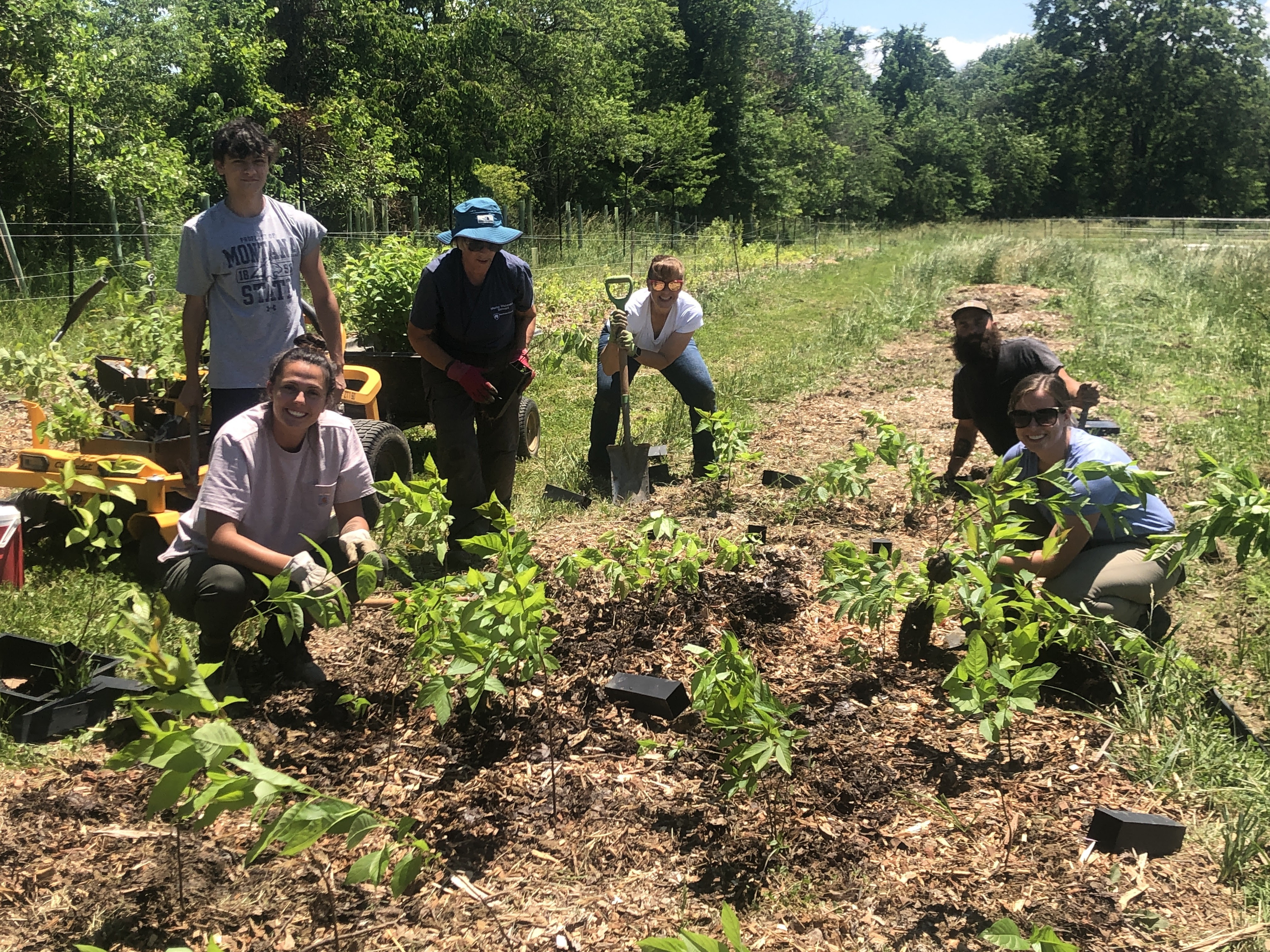
But while the ecological benefits of riparian buffer planting are promising, it’s important for us to avoid positioning ourselves as sidelined observers of these benefits. We are, of course, not just nature sentimentalists: we are embedded in and dependent on the land that we are restoring.

Capturing water and mitigating pollutants directly impacts our wellbeing; our breathing sways in time with the respiration of the green life around us; insects pollinate our food and nurture these soils. The land has always provided more materials for humans than our modern imaginations can fathom.

It’s essential that we recognize these facts as climate change pushes us into increasingly unfamiliar terrain and challenges the standard of living we’ve taken for granted. Recognizing the services of our local landscapes, and RE-localizing our impacts, are the steps we need to take to secure a livable future.

With this vision of a functioning ecosystem that thrives not in our absence, but in our presence, the Horn Farm’s riparian buffers become more than healing spaces for the land.

They’re a learning spaces too. We’re learning (or better, re-learning) ways to unite the needs of natural cycles with the material and caloric needs of people nearby. It’s a vision reconciling abundance in a world where ecological and societal wellbeing are often polarized: we CAN prioritize the protection of water, soil, and habitat while supplying goods for people, with annual harvests that actually promote the health of the buffer. Luckily for us, there is a word predating our work that describes this mosaic of purposes: multifunctional.

Click here to Read: Beyond the Stream


“I had very little background knowledge in ecological or environmental concepts.  I enrolled in the Land Stewardship Program for an introduction. Classes were stimulating, organized, and enjoyable. The program has inspired me to pursue additional training with a goal of a new direction in my career path!

– Karen Kaslow, 2023 Land Steward Training Program Graduate

Our Training Program instructors are now planning for 2024.
If you’re interested in our training programs and would like to be added to the waiting list, please fill out the form below. Wait list contacts will be the first to know when registrations go live this summer!

Click here to Sign-Up for the Waitlist


Apply Now: 2024 Greenhouse Internships

Looking to gain professional experience in horticulture and greenhouse management? Applications for the Horn Farm Center’s 2024 Greenhouse Management Internship are now open!

Interns will spend eight hours a week from February to May working alongside our Farm Manager in all aspects of greenhouse propagation, from production planning and seeding to overseeing the Horn Farm’s annual Plant Sale. Areas of focus include the day-to-day practices of nursery plant production, basic plant biology and anatomy, organic methodologies, and perennial propagation.

Click here to learn more.


Summer Youth Program: Ages 9-12

Scurry like a squirrel, build like a beaver, and move like a mastodon this summer at the Horn Farm Center!

This three-day program series is an opportunity to learn about animal behavior and ecology through the lens of the animal! Students will learn about squirrel, beaver, and mastodon by studying their habitat, life cycles, and behaviors. Each day, students will explore how these animals move in the landscape through fun, engaging activities and then they will become the animal by mimicking their behavior on the land while discovering how these animals play an important role in our ecosystems.

Join us on July 31- August 2nd from 9AM-12PM for Becoming the Animal Summer Series! Parents are encouraged to stay and attend the program, or we offer a drop-off and pick-up 30 minutes before class begins and ends.

Click here to learn more

Horn Farm Happenings – June 23, 2023

Become a Part of the Crew

Restoring land and reviving ecosystems takes time and a big team. That’s why we launched a new, dedicated volunteer program this spring focused on engaging with nature and each other in regenerative ways.

The Horn Farm Community Crew program offers hands-on volunteer training with Horn Farm staff. Volunteer crew members will play a key role in specialized projects focused on ecological restoration and bolstering our wooded and wild areas.

Perks of membership include ongoing training and education with experienced staff, a free t-shirt, volunteer social events, and the ability to log hours spent volunteering to redeem free class vouchers and other perks.

Over time, this program will help to cultivate a vibrant network of earth stewards dedicated to helping nature thrive! By learning and tending together at the Horn Farm Center, members can take the skills and experiences of land-based volunteering home and further spread the knowledge, determination, and confidence that our communities need to bring ourselves back into balance with nature.

Learn more about the Horn Farm Community Crew by visiting the link below and signing up for our second training day on Sunday, July 23rd!

Click here to learn more.


There’s no shortage of surprises for volunteers at the Horn Farm!

While working in our riparian buffer last week, Board Member Cindy Pizziketti and our Community Crew volunteers came across a nest of red-winged blackbird chicks on a red osier dogwood… accompanied, of course, by the shouts of an irate parent protesting nearby!

Throughout the seasons, hundreds of red wings call our meadows and wet fields home, preferring to forage in open habitats and freshwater edges like our riparian buffer. It’s always reassuring to see a new generation thriving at the Horn Farm!


Welcome Summer Intern, Mel Beans!

Meet Mel Beans, our new Education & Communications Intern! Mel joins us from the Public Service Summer Institute (PSSI), a program of the The Ware Institute for Civic Engagement at Franklin & Marshall College. For the next six weeks, Mel will be assisting our community engagement team with research and content development: creating future blog and social media posts, farm signage, and other educational materials. Additionally, Mel will aid us in identifying new audiences and outreach avenues to help us spread the word about the Horn Farm’s mission and offerings.

“I’m a rising junior at Franklin & Marshall College pursuing a B.A. in environmental studies and public policy. After taking an environmental justice course and diving into research on “forever chemicals,” I realized that I wanted to pursue a career that actively acknowledges and addresses the ways in which the environment is deeply interconnected with and integral to our wellbeing. I jumped on the opportunity to intern at Horn Farm Center, seeing how their mission aligns with my passions and career goals. As the Education & Communications Intern, I’m grateful to contribute to HFC’s essential role in demonstrating not only sustainable, but regenerative and resilient agriculture by assisting with research and outreach.

In my free time, I enjoy being with friends and family and in nature, thrifting, listening to music, and watching video essays. On campus, I’m a house advisor and the president of Catastrophic Relief Alliance, an F&M organization that addresses housing needs locally and nationally, especially in the wake of natural disasters.

I aspire to have a career in nonprofit work, specifically focusing on environmental and social justice. I’m also interested in urban planning!”


Summer Youth Program: Ages 9-12

Scurry like a squirrel, build like a beaver, and move like a mastodon this summer at the Horn Farm Center!

This three-day program series is an opportunity to learn about animal behavior and ecology through the lens of the animal! Students will learn about squirrel, beaver, and mastodon by studying their habitat, life cycles, and behaviors. Each day, students will explore how these animals move in the landscape through fun, engaging activities and then they will become the animal by mimicking their behavior on the land while discovering how these animals play an important role in our ecosystems.

Join us on July 31- August 2nd from 9AM-12PM for Becoming the Animal Summer Series! Parents are encouraged to stay and attend the program, or we offer a drop-off and pick-up 30 minutes before class begins and ends.

Click here to learn more


Plant Language: Ecology & Herbalism

“If we surrendered to the earth’s intelligence we could rise up rooted, like trees” – Rainer Maria Rilke

What is plant language? From an herbalist perspective, plant language is the ability to understand how and why a plant manifests the way they do in the world.

We can detect this language through taste, touch and smell. We can also learn the language of plants by understanding how plants shape themselves in response to their environment. This program will uncover the secrets of plant language by focusing on one particular herbal ally: Goldenrod.

Guided by clinical herbalist, Alyssa Dennis, students will harvest and prepare goldenrod while examining their ideal habitat and discussing their growth cycle. In addition to uncovering the mysteries of plant communication, each student take home a prepared goldenrod tincture.

Class will be divided into morning and afternoon sessions with a lunch break from 1-2pm. Students are encouraged to pack a lunch to enjoy during this time.

Join us for Plant Language: Kin-centric Ecology within Herbalism on September 16, 2023 from 10AM-5PM at the Horn Farm Center! 

Click here to register

Horn Farm Happenings – June 9, 2023

The Reality of Our Work

For as much as we embrace the spring as a time of renewal, beauty, and hope, we can’t ignore the reality of our agonized Earth.

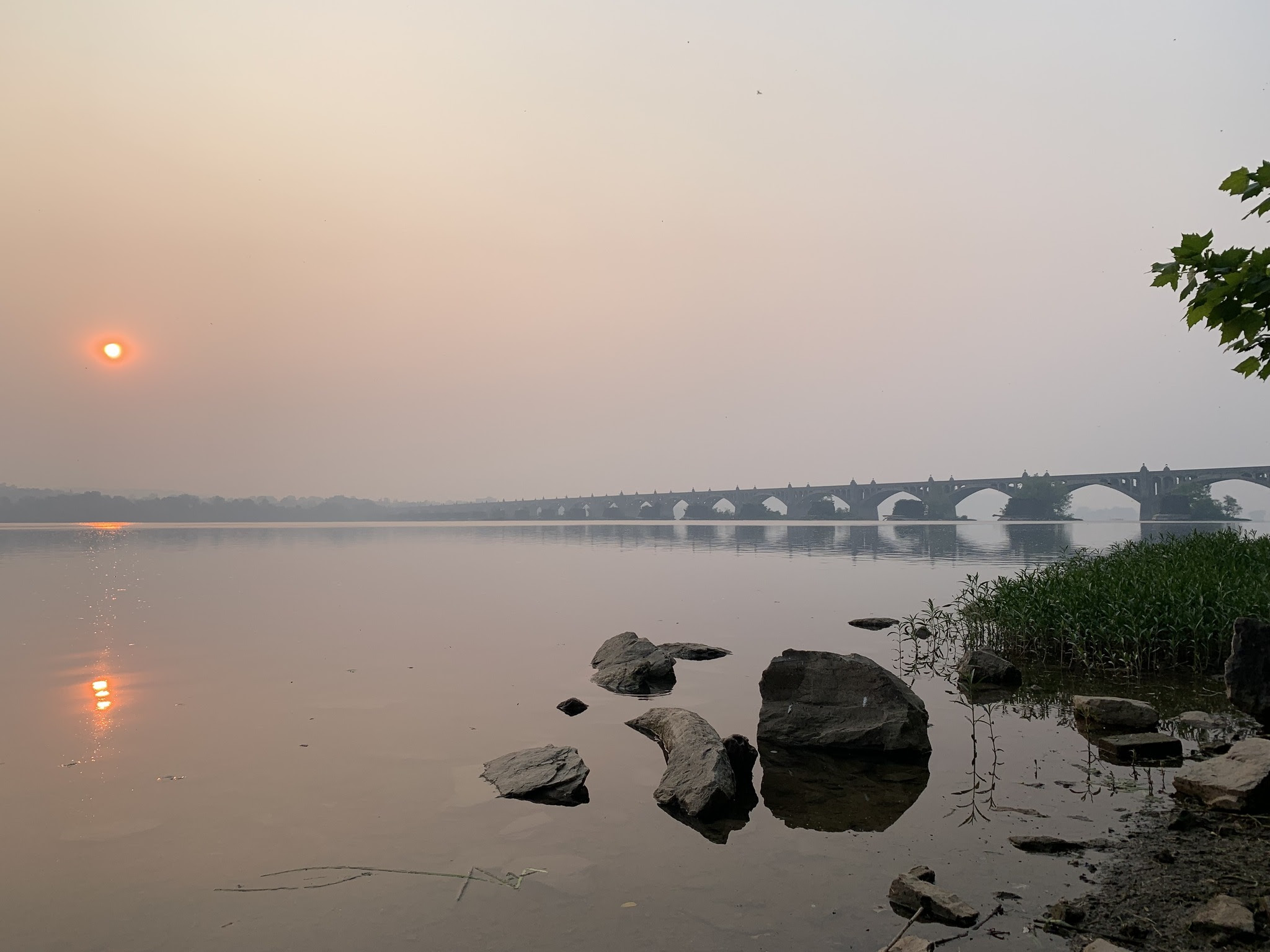
This week our crew was reminded of this as we experienced the smoky haze lingering over the fields and forests of the Horn Farm, coupled with the faint smell of fire. A snow-parched winter followed by an exceptionally dry spring has fueled unprecedented wildfires in eastern Canada: setting records in Nova Scotia (a typically humid coastal environment) and subjecting Quebec to its worst early-season forest fire outbreak ever.

Just as the health of our small local streams connects to the health of the whole Susquehanna River, this event is another reminder of how ecosystems and their struggles are not detached, nor are we. Impairment and destruction in one system negatively impacts its neighboring environment–locally, regionally, and globally. While we’re spared of the fires, our area is experiencing poor air quality that directly affects the health of our community, especially farmers and other outdoor workers, and those with respiratory conditions like asthma and cardiovascular disease.

The haze will clear in time, but we can no longer afford to write off events like this as temporary blips in an otherwise stable biosphere. Human-fueled climate change is projected to continue shrinking our winters and warming our springs, creating the conditions that spell disasters both human and ecological. This is especially alarming in a place like Canada, which houses North America’s boreal biome. Boreal forests contain the highest amounts of stored carbon, releasing 10 to 20 times more planet-heating carbon pollution per unit of burned area compared with other ecosystems. Increasingly extreme forest fires in our northernmost forests–the fastest warming biomes on earth–makes the imperative that we reduce human-generated CO2 emissions all the more pressing.

Nature’s need for healing is always apparent in our work as land stewards and educators, but the events unfolding of late, while staggering, have been activating. This is why we plant and restore so passionately: because our world needs us to build back its resilience, and restore balance to our relationship. The world needs us to repair what we’ve broken.

Beyond sobering our consumption, plants are some of our greatest allies for absorbing excess carbon from the atmosphere, combating heat with cool microclimates, retaining water, and providing habitat refuge as ecosystems continue to waver. We’re committed to implementing and teaching ways of growing food, restoring land, and living our lives that contribute to, rather than extract from, nature, because we know that the health of future generations–human and otherwise–depend so deeply on the choices we make now.

Sending our best wishes to everyone in our bioregion and beyond–stay safe out there!


As we spend these days breathing slowly and bearing witness to the land’s struggles, we’re grateful for the beauty and lessons of resilience that nature shares with us. This month, Community Engagement Coordinator Andrew Leahy captured some of her finest moments. Spring is in full bloom at the farm, despite the incredibly dry conditions. Check out these photos of our Ecological Garden Demonstration Plots, designed and planted by last year’s Ecological Gardener Training Program students.

Interested in digging deep into reviving local landscapes?
Our waitlist for the 2024 training programs is live. Sign up and be the first to know when registrations for next year open this summer!


Horn Farm CSA: The Harvest Has Begun!

This week marked the start of the Horn Farm CSA! We welcomed back returning members as well as a few new families. This week’s harvest included lots of leafy greens and even cherry tomatoes from the Kilgore Family Farm’s high tunnels.

With the early spring drought parching our soils, we are keeping a close eye on our water resources on the farm. While we conserve as much as we can by mulching, watering in the evening, and reducing how much we irrigate overall, we are still anticipating impacts, and even crop failures, from these unusual conditions.

We are grateful to be supported by a community that understands the risks and challenges of farming. A big thanks to our CSA members, as well as our regular patrons, for your commitment to our work and mission.


Riparian Rangers & Other Volunteers Needed

On Saturday, June 17th from 10am to 12pm, we’re seeking volunteers to help us check on hundreds of trees in our multifunctional riparian buffers.

Volunteers will help us perform general upkeep including: checking and marking trees, removing bird nets, righting and stabilizing tree tubes, clearing non-natives, and planting new trees as needed.

And, you’ll get to learn about perennial plants, ecology, and ways to restore local waterways.

Register to Volunteer


Functional Movement for Everyday Life

Summer is a great time to get your body moving! Informed by various tasks we might do in the garden, around our house, or just while living life, this new workshop explores natural movement, breathwork, specific body part exercises, functional/dynamic movements and restorative stretches.

The main goal is to begin to develop a new “movement lens” and to build physical resilience by moving, breathing and observing. Since it is our first run of this class, we invite you to join us at no cost and help us shape the design of our future Movement class curriculum so that we can authentically meet people where they are at with appropriate physical challenges.

Throughout the class we aim to cover a variety of objectives such as:

  • A chance to connect with the natural environment
  • Opportunity to develop tools to become more resilient movers
  • Honing a ground up approach to strengthening and mobilizing ankles, knees, hips, back, and shoulders
  • Performing dynamic movement groupings that get hearts rate up and blood flowing
  • Mastering breathing cues that allow for efficiency and ease and promote energy and wellbeing
  • Implementing restorative stretches that address tightness and soreness so we can keep moving well day after day

Join us for our Functional Movement for Everyday Life on July 27th and August 17th at 5:00-6:30PM at the Horn Farm Center! 

Click here to register